
Residential
Load shedding continues unabated for South Africans, and it is envisaged that the situation will worsen before it improves. The constant power cuts wreak havoc on our daily lives, affecting how we work, cook, study, live and entertain. Repeated electricity outages also damage electrical appliances and compromise home security. While there is nothing we can do about the scheduled outages, there are many ways to combat load shedding, by installing our own alternative energy solutions and allowing us to live normally.
The one thing that South Africa has, is a lot of sunshine – we average more than 2500 hours of sunshine per year. Solar solutions convert the sun rays into electricity and are becoming more and more affordable, and battery storage provides you with additional power after sunlight hours. Portable and standby generators also allow you to meet your electricity demands during loadshedding. These proven technologies keep your household up and running and increase your home’s value.
SOLAR
Homeowners who install solar power systems can receive numerous benefits such as lower electric bills, lower carbon footprints, and potentially higher home values

BATTERIES
A home battery backup is a system that stores energy generated from your solar panels. The stored energy can then be used to power your home during times when electricity is not available.

INVERTERS
In case of a power failure the backup system automatically switches over, via an extra fast transfer switch to the inverter, which will continue to provide power to your household

GENERATORS
Generators can handle a whole variety of unique needs, which is why they can power up an entire home as a backup power source during power outages.

WIND TURBINES
New to the residential market, a wind turbine can reduce your consumption of utility-supplied electricity for lighting, appliances, electric heating and cooling

ELECTRICAL
We provide design, installation, service and maintenance of electrical systems within any business environment and ensure that the system is designed correctly and meets with all the applicable codes and standards.

PREPAID METERS
As the name suggests, they require you to pay for your energy in advance and allow you to manage and monitor your daily use. Prepaid meters allow you to decide when to use less and when to use more.

MONITORING
The software systems allow you to analyse energy data, identifies patterns, and optimises energy usage, enabling you to customise energy-saving schedules and receive alerts.
GAS
We supply and install, service and maintain a wide range of gas hot water storage systems and instantaneous gas hot water heaters to suit your households needs, at affordable prices.

GEYSERS
We offer fast repair and service of existing water geysers plus the installation of new geysers including gas, electric and solar models. Our team comprises first class, experienced and licensed hot water plumbers.
Residential Product Solutions

As much as any alternative energy solution is fast becoming an essential commodity, it remains expensive. If you want to join the renewable energy revolution but are not sure what financing route is right for you, we can assist you to know your options, including those that involve capital expenditure and those that require zero capital expenditure.
We provide various ownership options as well as a the “Pay as You Use” option, which means if you don’t take the power, you don’t pay for it, but you still get the benefit of clean and stable power without any capital outlay.
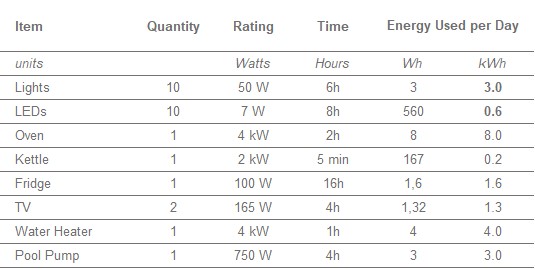
Once you have noted down your equipment and what the loads will look like, separate them into:
Essential Loads – items you need to run through load shedding and power failures.
Normally these are lights and plugs in the home (or only some of the plug circuits if the electrical distribution board (DB) can be easily split). This is the primary information used when sizing the battery backup solution correctly.
Non-Essential Loads – items which you do not need to run during load shedding.
Most common items seen here are hot water geysers, pool pumps, ovens/stoves, the heavy users that draw either lots of power or consume lots of energy over time, and it would be extremely expensive to add batteries to carry these loads.
INVERTERS
There are plenty of options available when it comes to selecting an inverter. Inverters vary in size, efficiency, performance, and capabilities. We provide a variety of inverter brands on single and 3 phase systems for residential use. Single unit inverters can range between 2.5kW to 16kW units and can be paralleled to accommodate for your every need. There are 3 types of inverters which could be deployed based on your requirement.
Hybrid Inverter: Hybrid inverters are smart inverters with the ability to store solar energy in a battery system for back-up purposes. If you want to keep your property running on backup solar power during an outage, you need a hybrid inverter and batteries. Hybrid inverters combine the features of off-grid and grid-tie inverters into one useful device and eliminate the need for a separate devices.
Off Grid Inverter: An off-grid inverter is a solar inverter that is not connected to mains/Eskom power at all. The off-grid solar inverter draws power from a battery, where it converts the DC power to AC power. They do not sync with the electricity grid, and so they also cannot feed excess production into the utility grid either. This means that all solar energy must be stored in batteries, so the battery pack needs to be large enough for this purpose. Off-grid systems are completely energy self-sufficient, so they will not be affected by power outages on the utility grid.
Grid-tied Inverter: Grid-tied inverters are designed to supplement mains power, not replace it. Where sufficient solar power is available, it is delivered to the system through the standard DC to AC conversion process. However, when conditions do not allow for sufficient solar power to be produced, such as on cloudy days or at night, the system will switch back to grid power alone.
BATTERIES
Solar batteries store the excess energy generated by your solar panels, which can then be used to power your home during gloomy, rainy days, or after the sun sets. Lithium-ion batteries are far more in demand compared to any other battery, due to their much longer battery life (6,000-10,000 cycles).Other advantages include:
- Much longer warranty periods (5-10 years)
- Greater depth of discharge (80-100%) – Increase the time you can run off battery power
- Built-in BMS (Battery Management System) which assist with shorter charge and longer discharge capabilities
- Maintenance-free, No need for daily and weekly inspections, top ups and maintenance visits
SOLAR PANELS
The most used solar technologies for homes and businesses are solar photovoltaics for electricity, passive solar design for space heating and cooling, and solar water heating. Solar panel sizes vary between 340W to 810W with a host of manufacturers. We dimension your solution in line with your requirement, the inverter capacity and roof space. Various designs for solar carports and ground mount structures are available if the space on your roof is inadequate.
Copyright © 2025 JC Energy